
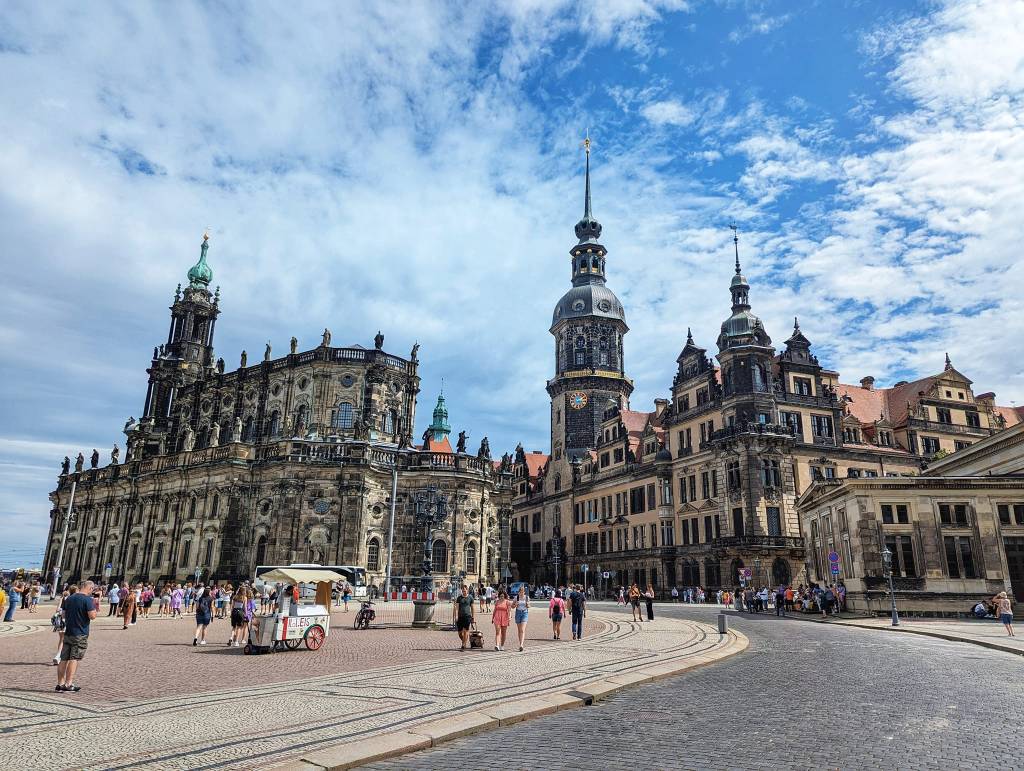
Ah Dresden, you beautiful pearl of the East (as in Eastern Germany). This city is not without reason also called Elb-Florence, because the architecture there is strongly reminiscent of the historic buildings of the Italian city in Tuscany. Instead of the river Po, Dresden has the Elbe. A friend of mine loves this city very much and invited me on a trip for his birthday. I hadn’t been there in almost 20 years, so it was about time anyway. Off we went!
Mode of travel
From Düsseldorf we arrived by train. This was primarily because we both do not have a car, but it is also cheaper in comparison and, depending on traffic, also faster. The regular travel time is about six hours. Depending on how early in advance you book, you can even make real bargains with the tickets. However, I do not know how expensive the train tickets were, because my friend generously booked and paid for them. If you prefer to fly in from further away, that’s no problem though. Dresden has its own international airport.

Accommodation
I just realised that the photo above is the only one I took of our accommodation. My friend had booked and paid it, so I again do not have details for you. All I can say is, that there are nice and affordable Airbnbs as well as hotels and hostels in Dresden if you go during off-season and avoid national holidays.
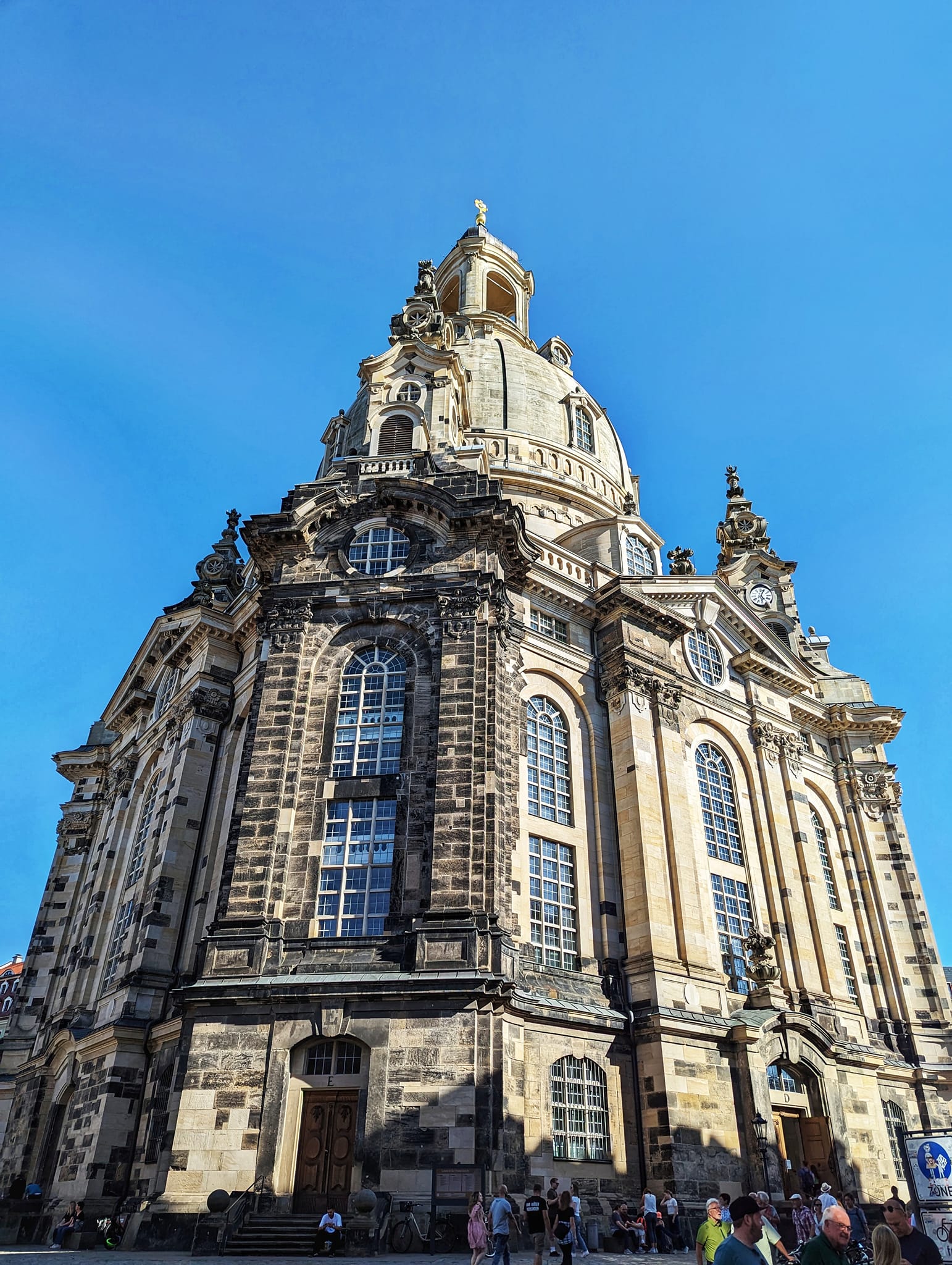
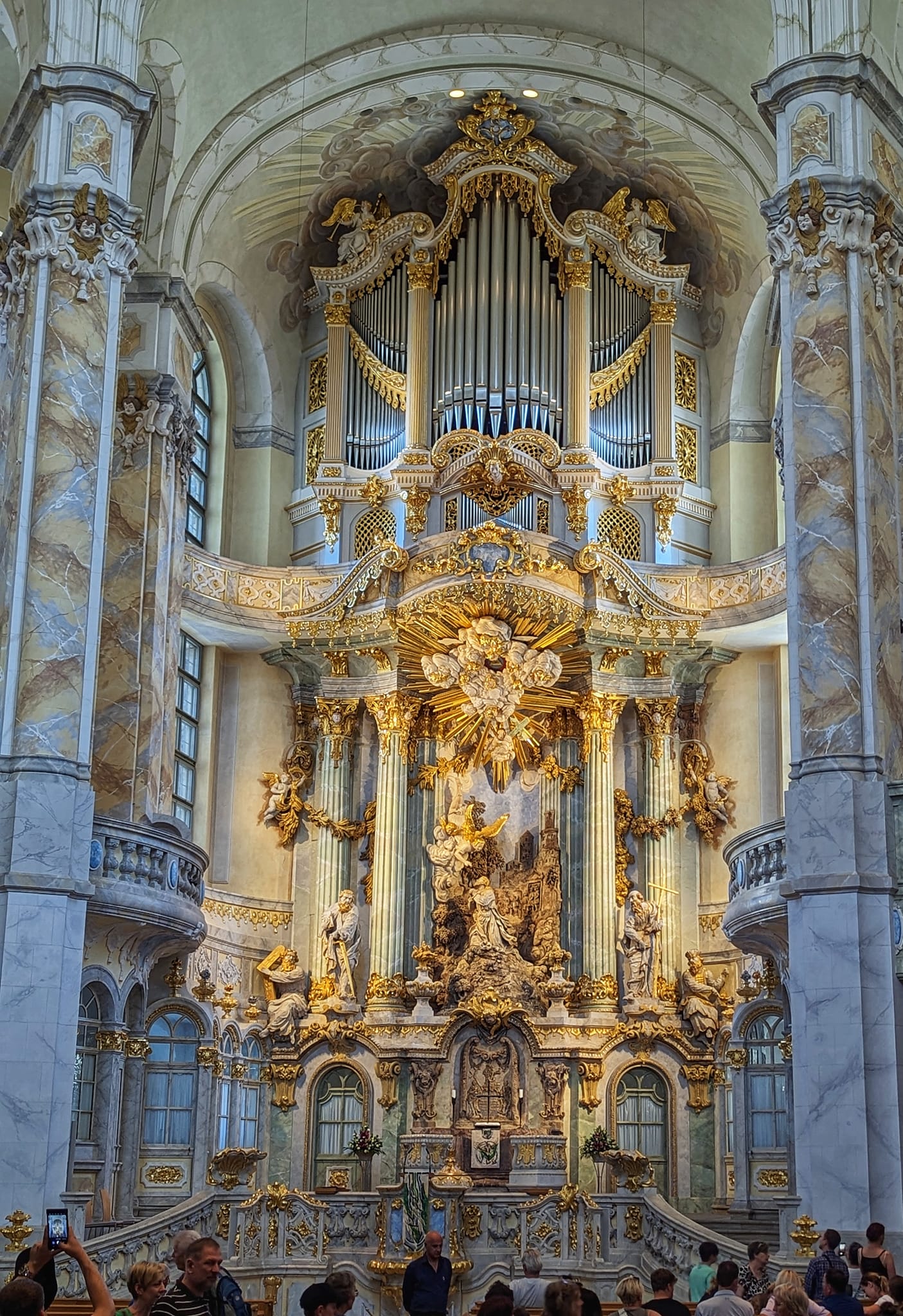
Frauenkirche (Church of Our Lady)
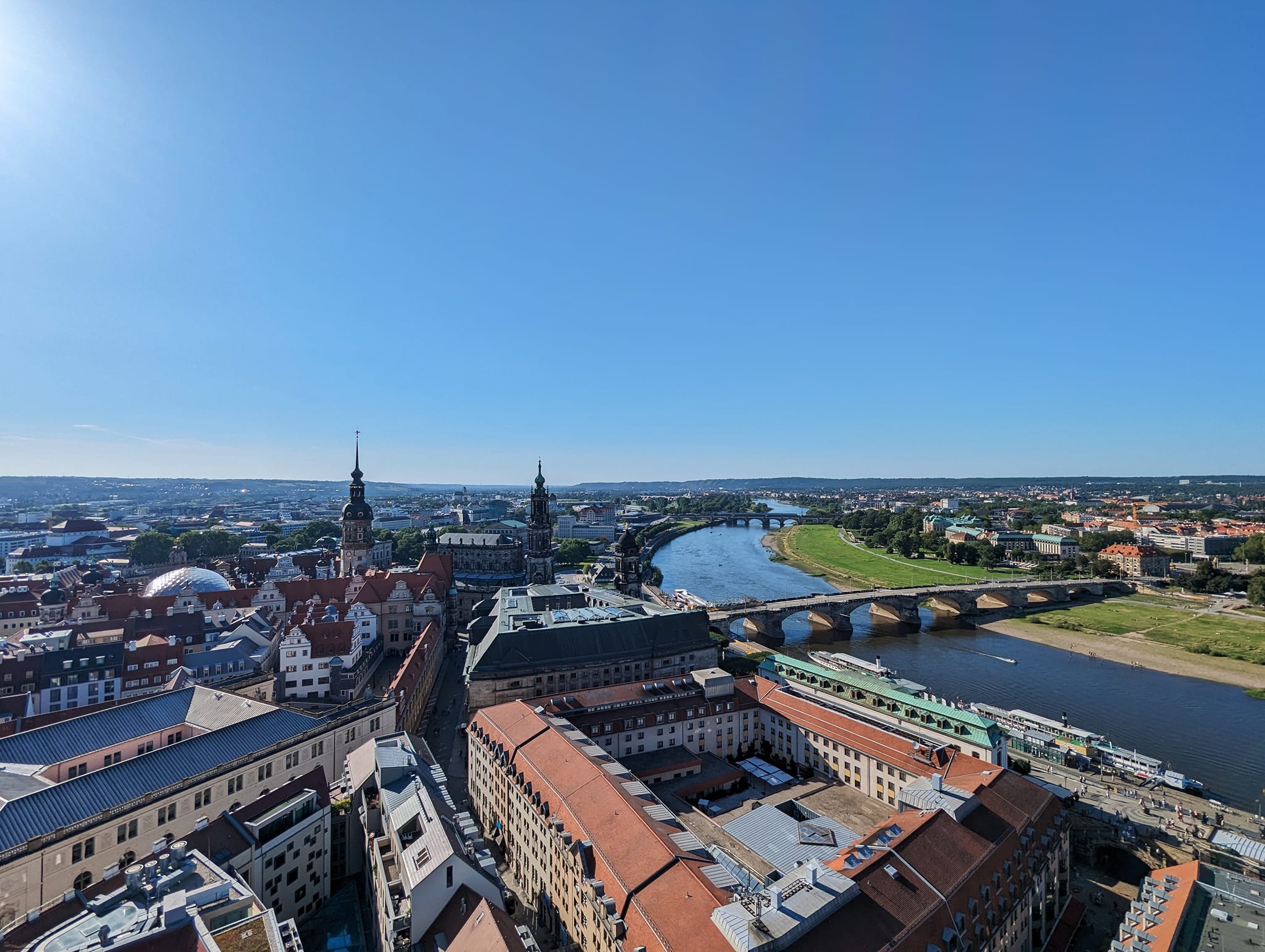
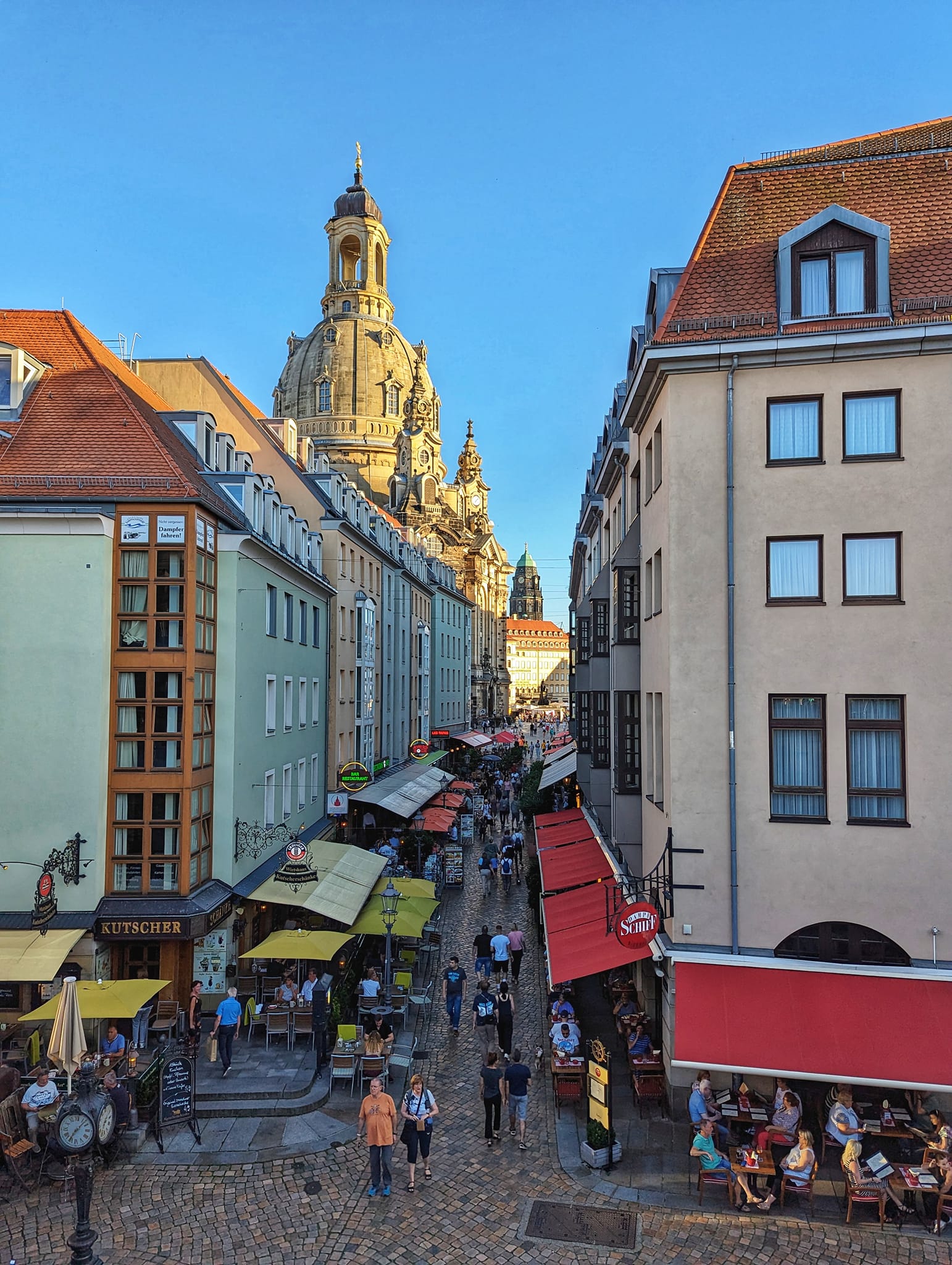
The Frauenkirche is probably Dresden’s most famous landmark and a must-see for visitors. The history of this impressive church dates back to the 11th century. The famous dome building by George Bähr from the 18th century has shaped the cityscape ever since. After its destruction in World War II, the ruins remained a memorial for a long time until reconstruction began in 1993, giving the church the look it still has today.
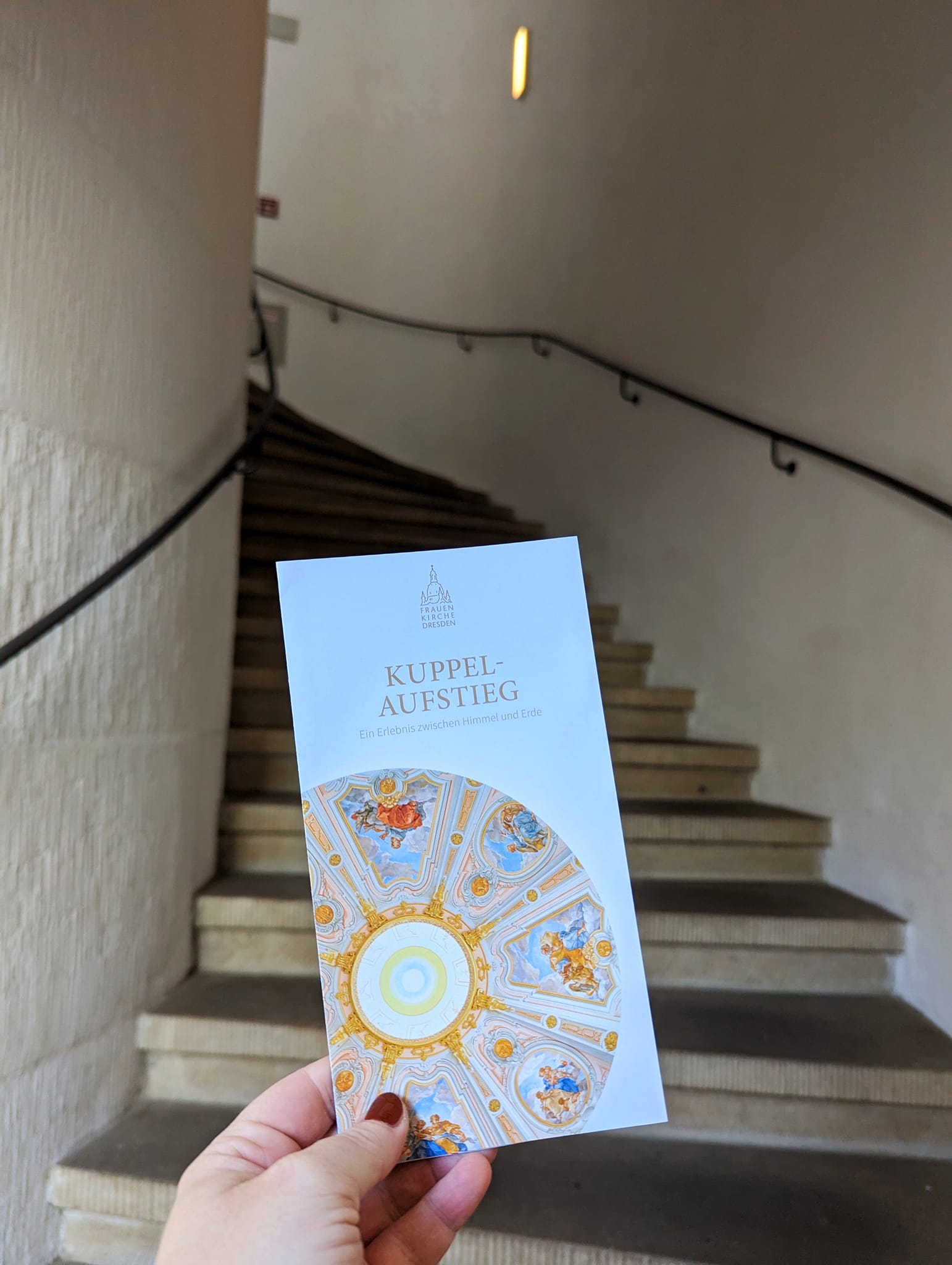
It is a beautiful building inside and out. However, I recommend not only visiting the nave (free admission), but also climbing the tower (regular price is 10 Euros). Once at the top, you have a great view over this beautiful city.
Augustusbrücke (Augustus Bridge)
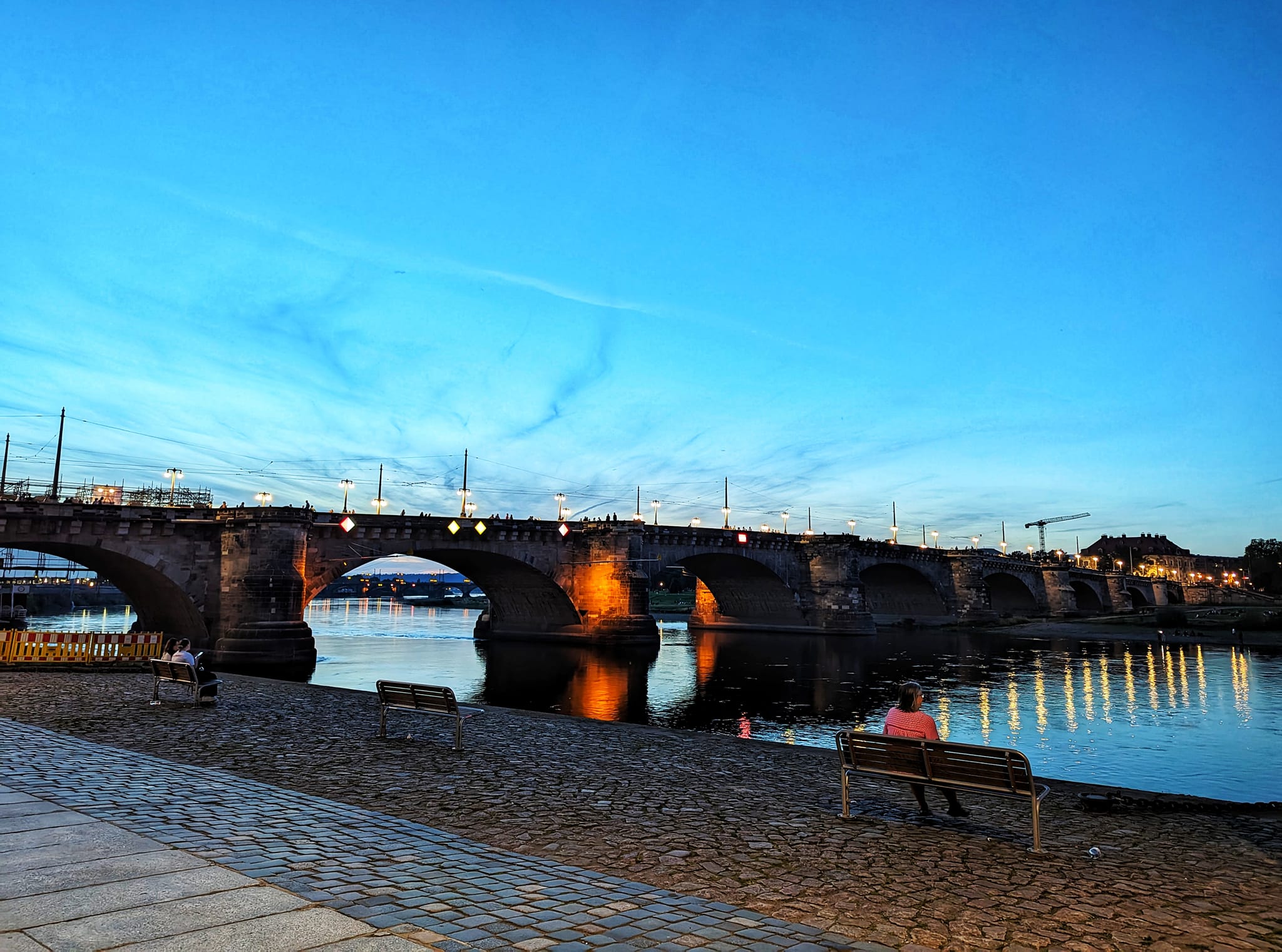
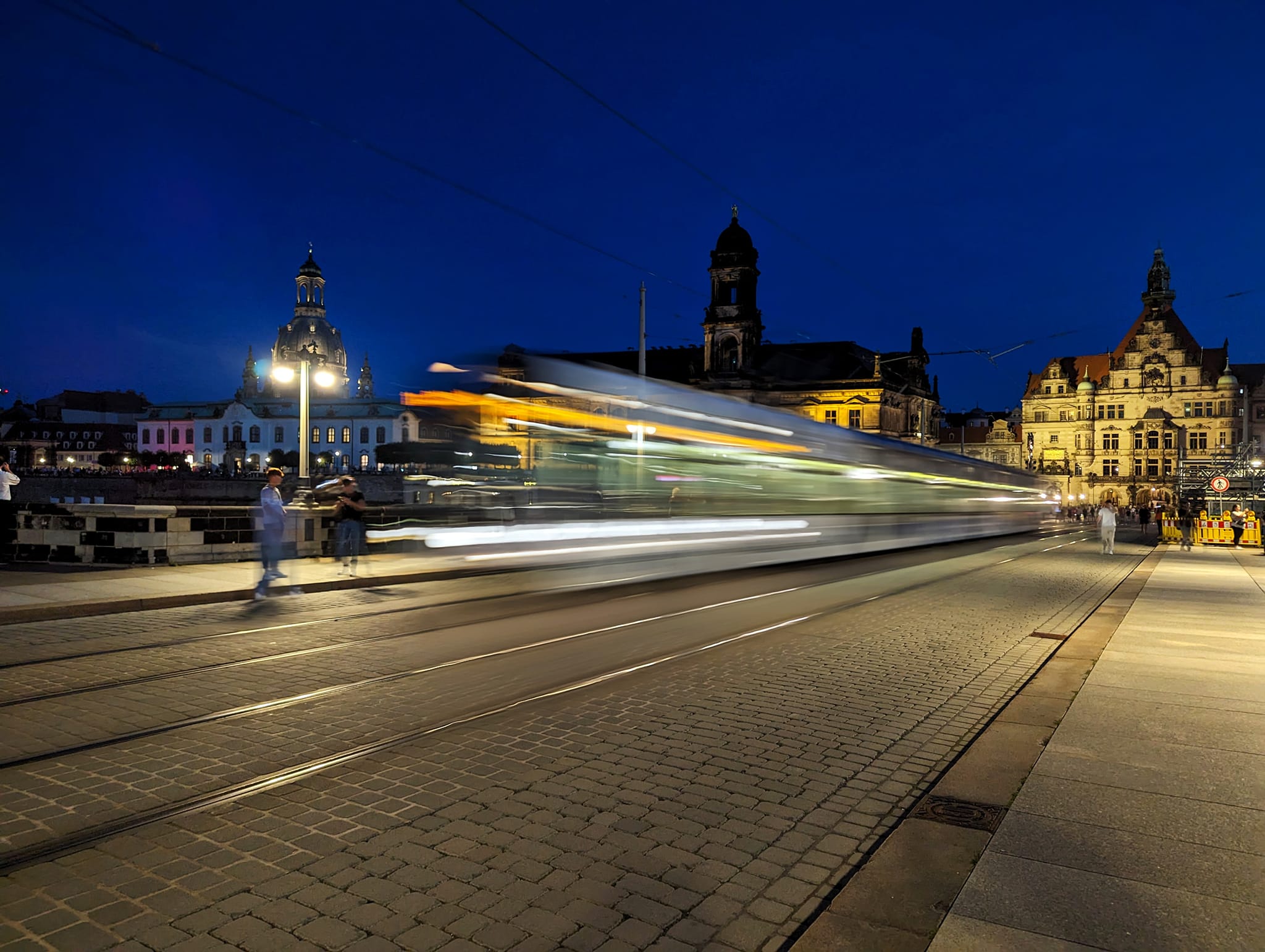
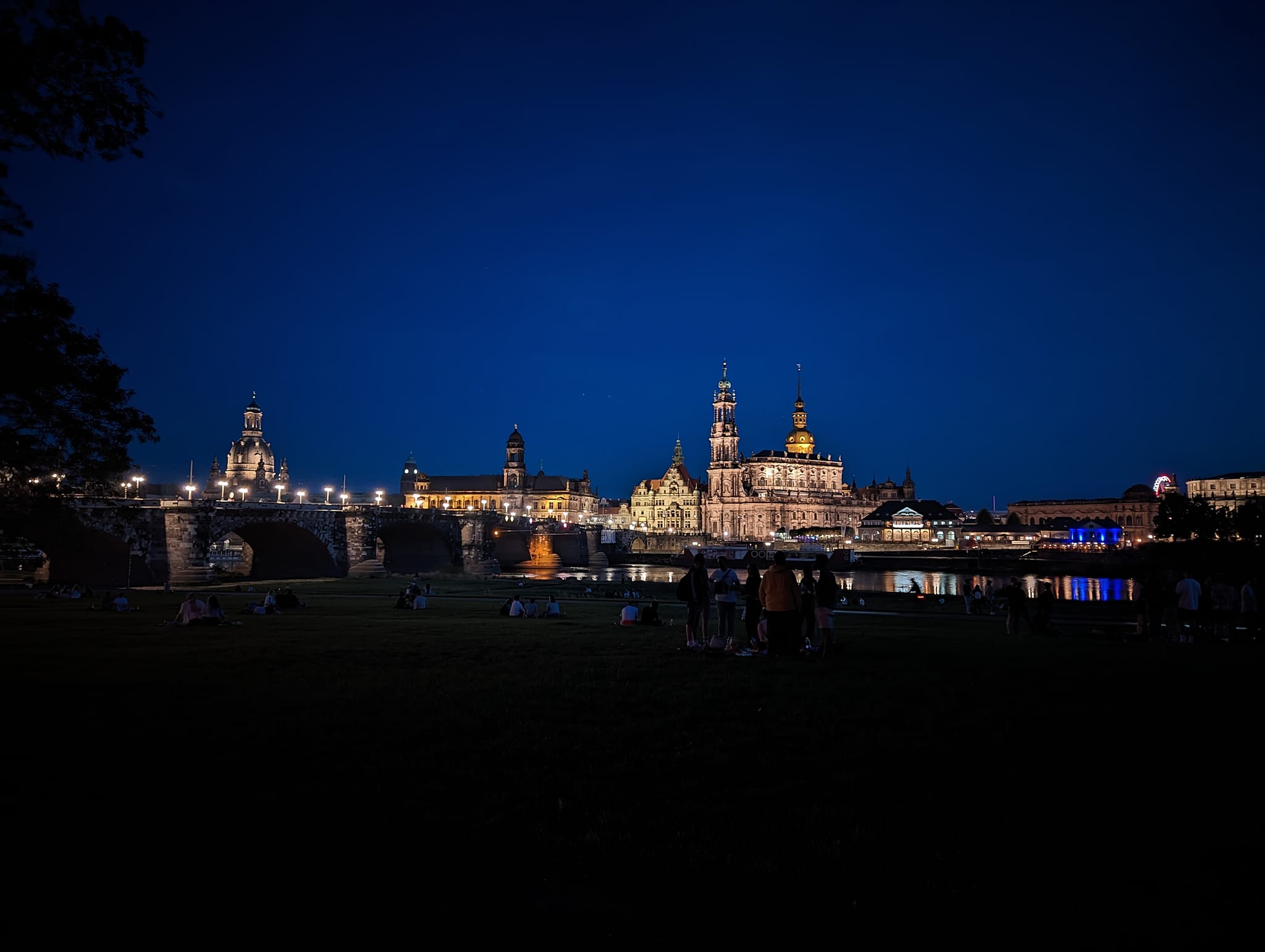
Augustus Bridge is located in the heart of the city (right next to Frauenkirche) and crosses the river Elbe. This bridge is the perfect spot to take great photos of the old town and skyline of Dresden. Especially at night you have a beautiful view of all the illuminated historical buildings. If you want to capture a particularly beautiful panorama, cross the bridge and turn left at its end. If you go down the stairs, you’ll end up in a park on the riverbank. If you move a couple hundred meters away from the bridge, you’ll get a great view of the opposite bank.
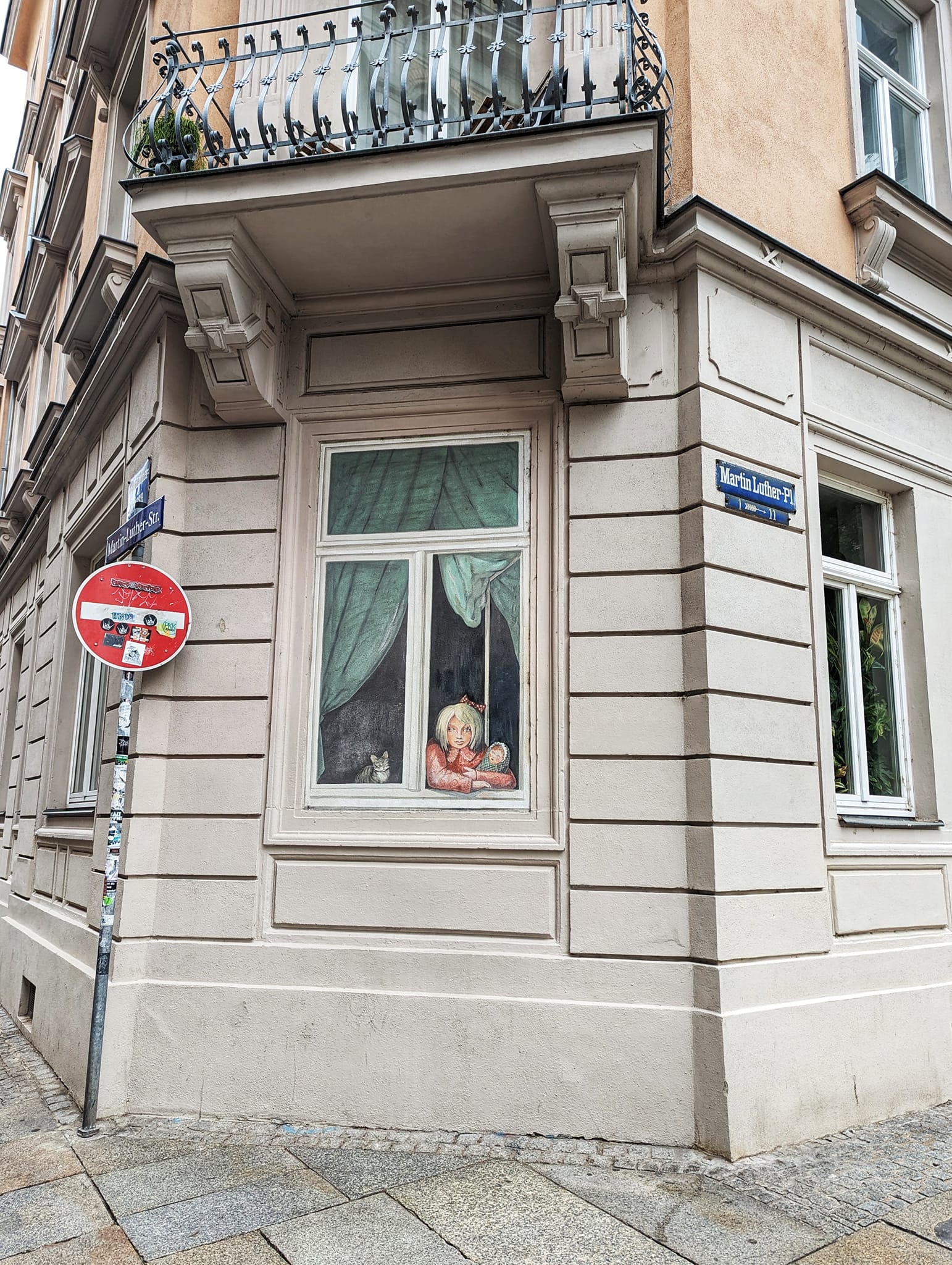
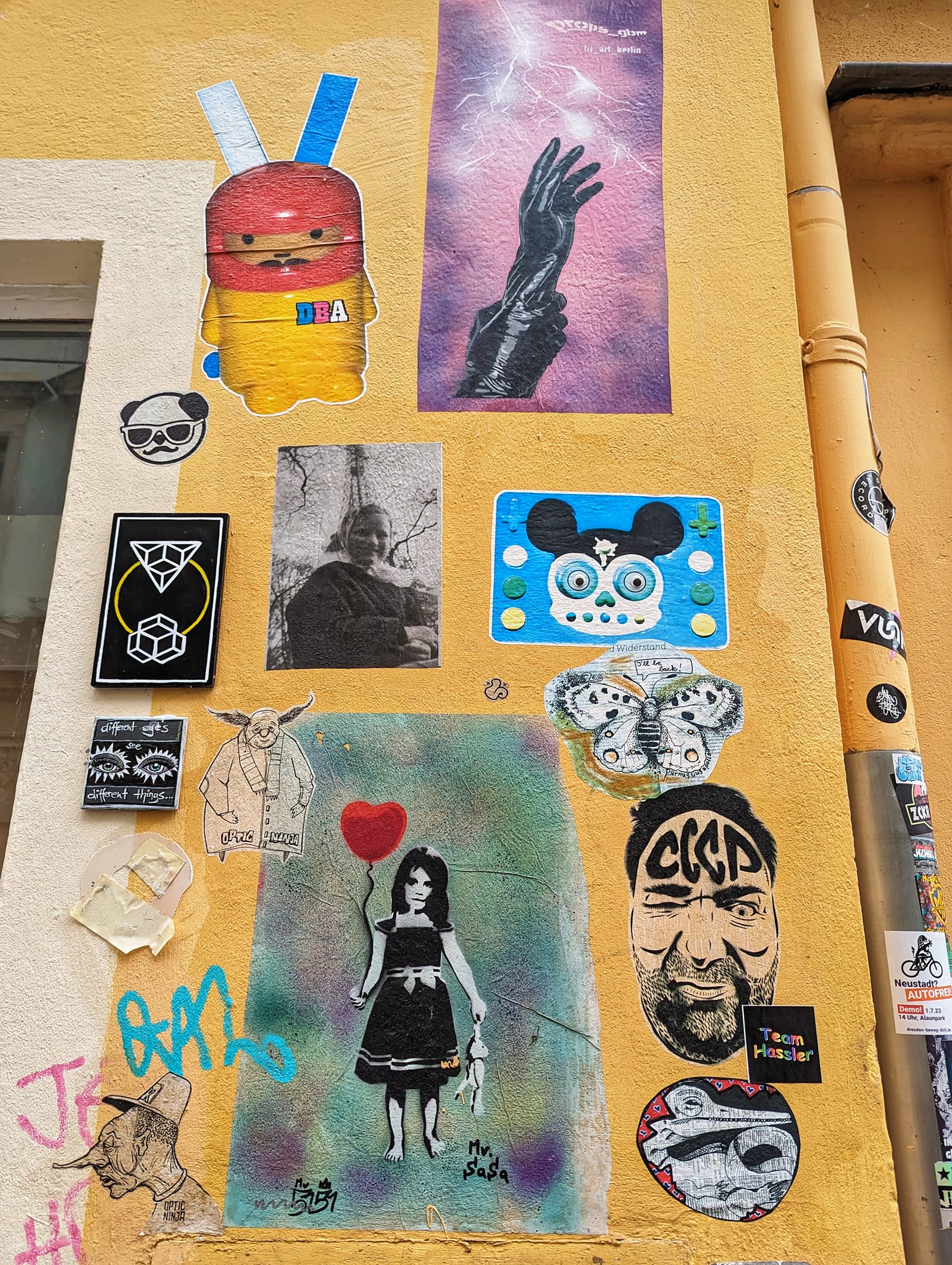
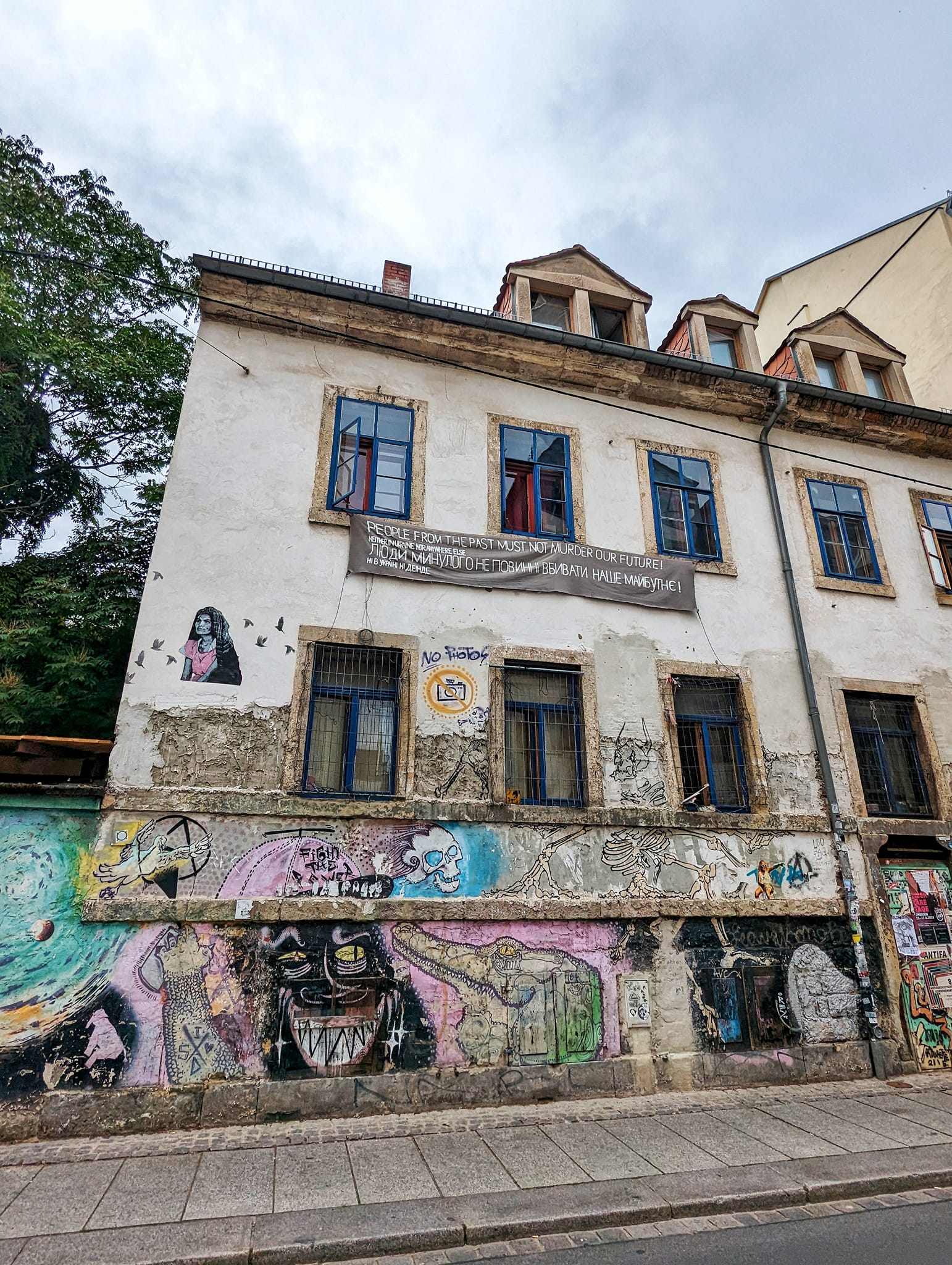
Äußere Neustadt (Outer Neustadt)
The website dresden.de describes it best, so I translated their text for you: “In the crossroads between Louisenstraße and Alaunstraße lies a Wilhelminian style quarter with an original flair. The charming alternation of restored and old houses, narrow alleys and winding backyards with pubs, restaurants and stores from elegant to flashy makes Äußere Neustadt a special place.” This pretty much nails it. You can find tons of amazing street art there – simply get lost in the streets (it’s not a huge area) and explore! You should also visit Kunsthofpassage, an ensemble of interconnected backyard art projects. Access is possible either from Alaunstraße 70 or via Görlitzer Straße 21-25. I didn’t have time to visit it this time, but I’ve seen it before so it was fine. I totoally recommend to check it out though!
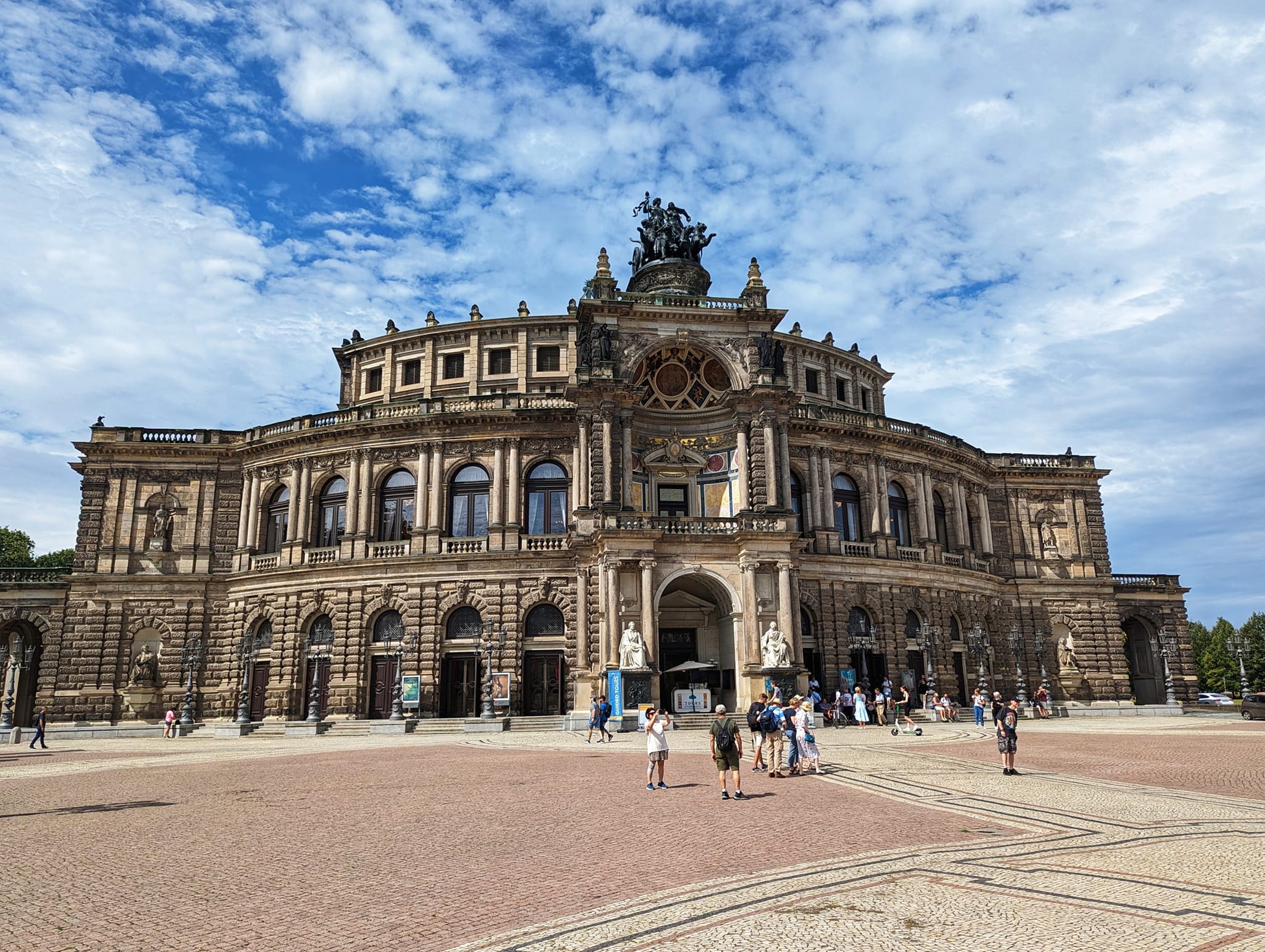
Semper Oper
Semper Opera House has a long historical tradition as the court and state opera of Saxony. It was named after its architect Gottfried Semper and looks absolutely stunning. I only marveled at it from the outside but if you enjoy opera or ballet and plan ahead you can book tickets and go inside.

Zwinger
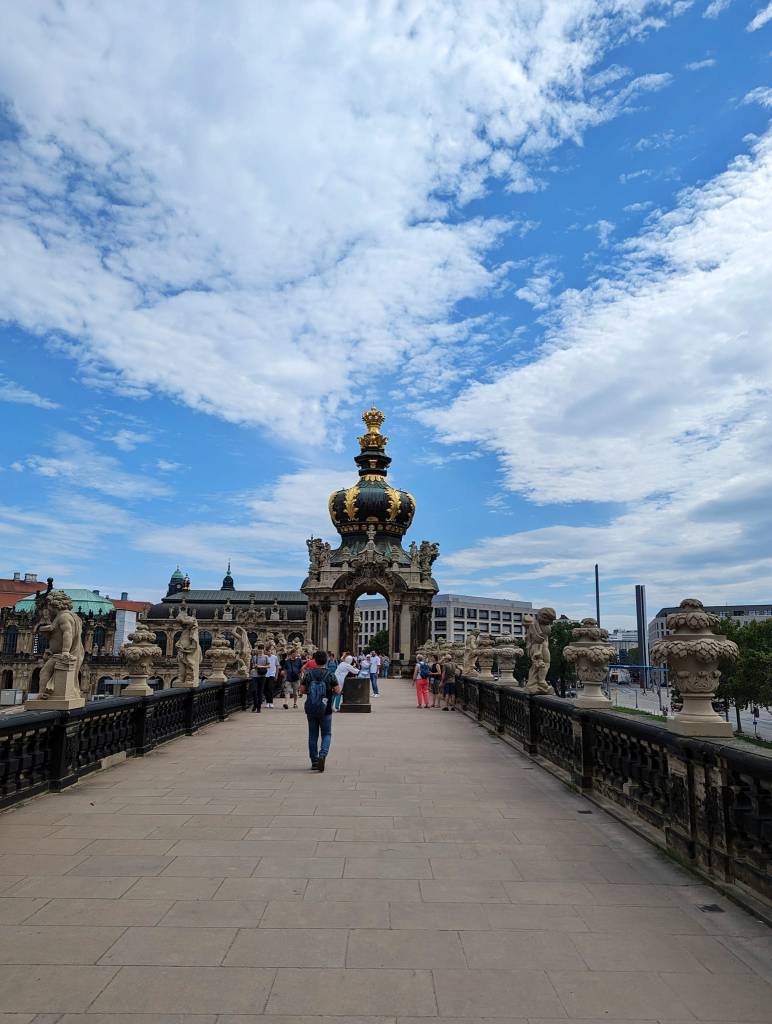
The Zwinger is the most important building of the late Baroque period and one of the city’s most famous landmarks. It was built from 1710 to 1728 as an orangery and courtly festival square. The beautiful architecture provides insights into the splendor of Augustus the Strong’s time.
We visited in August 2023 and there was construction going on, so not all areas were accessible. We wandered around all the parts that were open to the public though and it was lovely! You can visit different art exhibitions inside the buidings too but we didn’t have time unfortnately.
Fürstenzug (Procession of Princes)
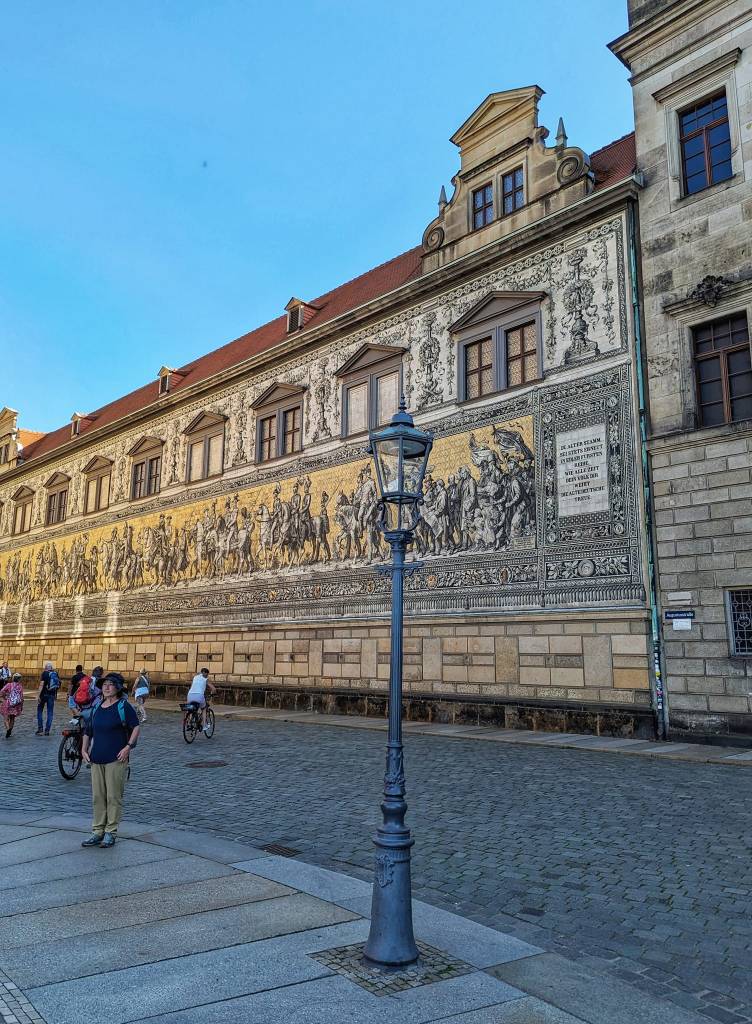
Fürstenzug is located on the outside of Stallhof (stable yard) at Palace Square. The 101-meter-long mural depicts the history of the Saxon ruling dynasty of the House of Wettin as a larger-than-life equestrian procession. This artwork by Wilhelm Walther was installed as a sgraffito on the outer wall of the Long Walk between 1872 and 1876 to mark the 800th anniversary of the Wettin House of Princes. As protection against the external weather conditions, the quickly fading work was transferred to Meissen porcelain tiles between 1904 and 1907. Over 24,000 tiles were used to depict the 35 princes, margraves, electors and kings as well as another 59 scientists, artists, craftsmen and peasants. It is the largest porcelain painting in the world.
Albertinum
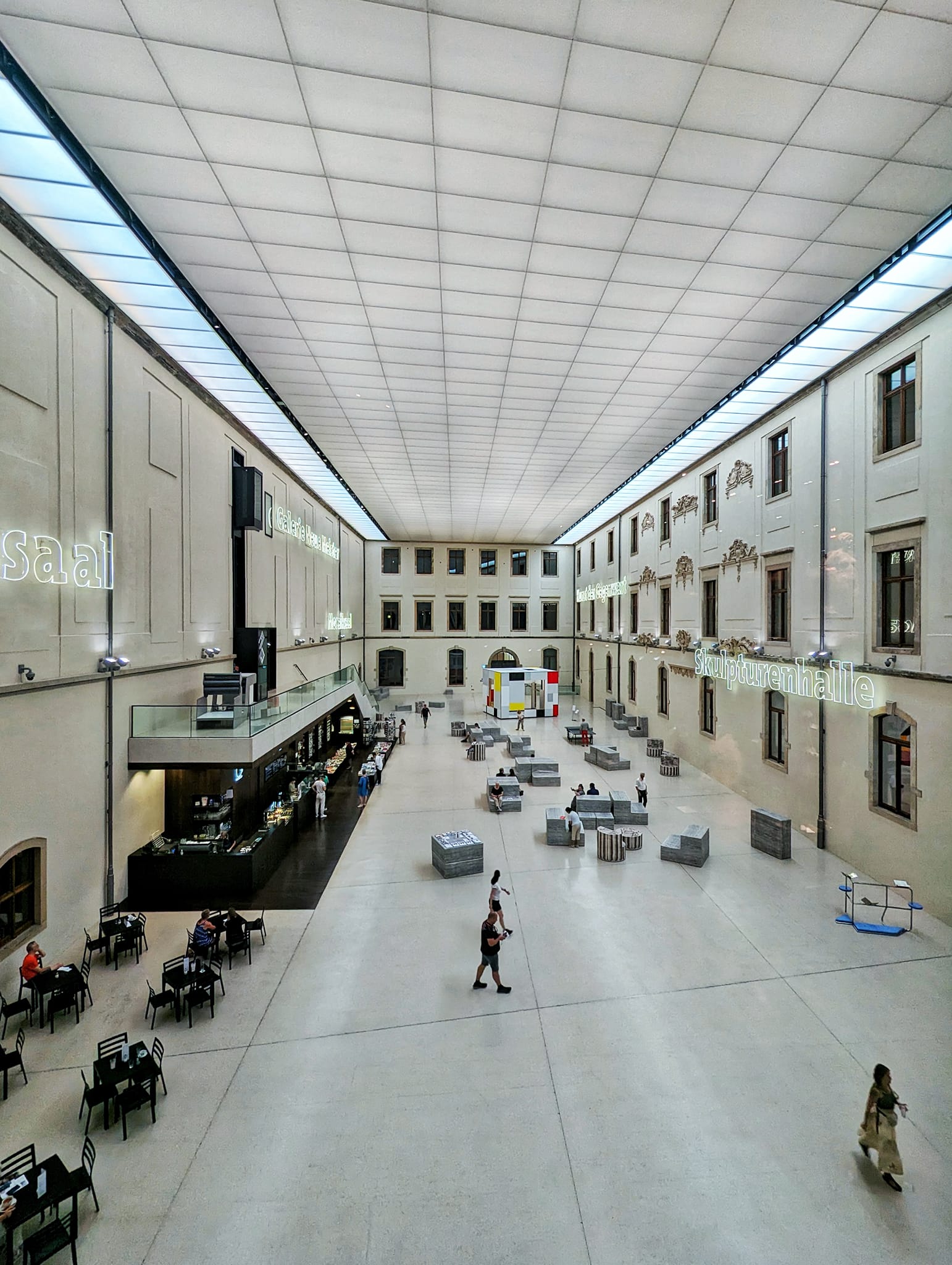
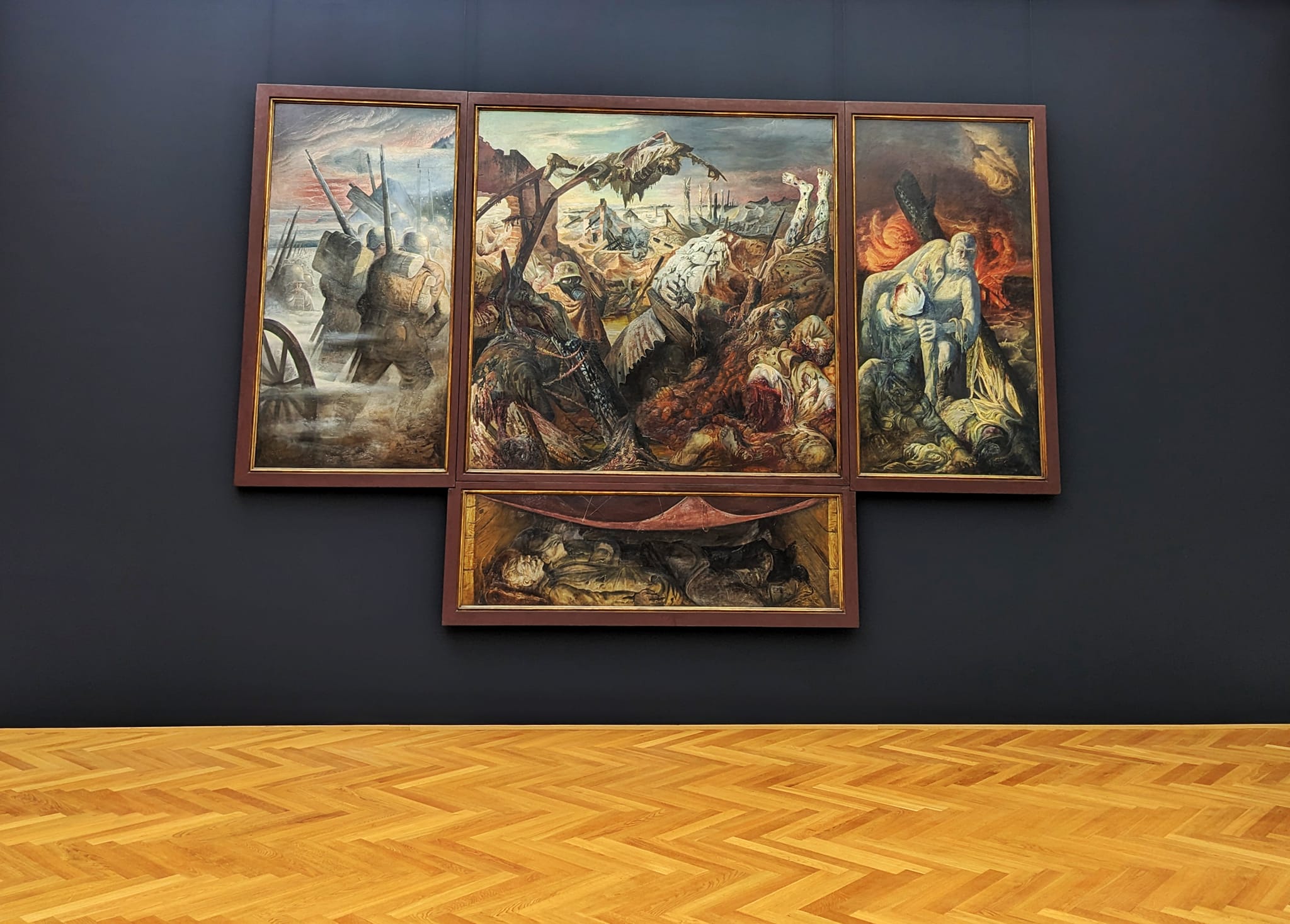
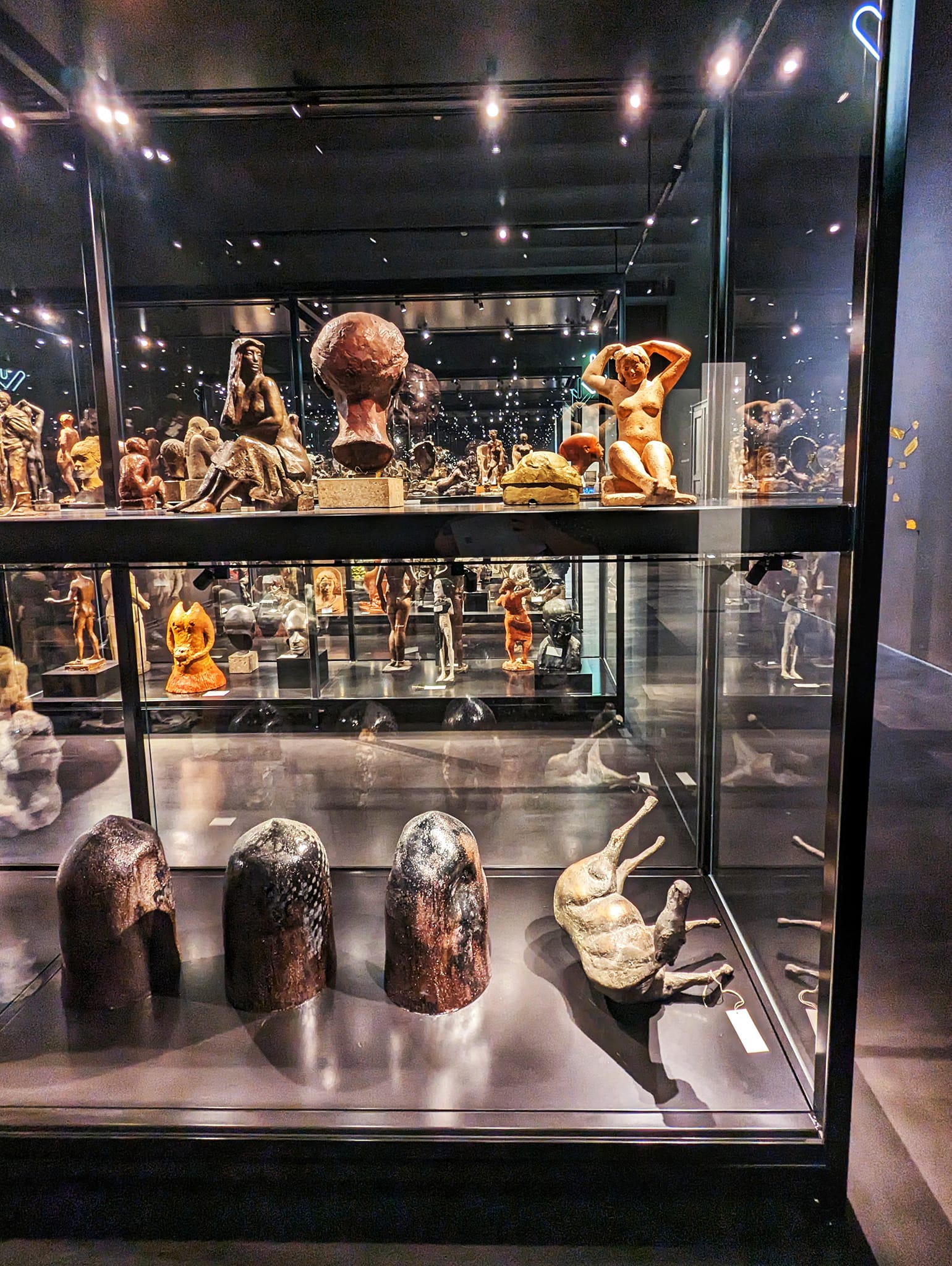
Albertinum is a museum that exhibits the masterpieces of art from Romanticism, Impressionism, Expressionism, New Objectivity and the present. I really wanted to go there because they have one of the most famous German paintings in history, Otto Dix’s “Der Krieg” (The War). It was amazing seeing this and many other great pieces in person. Albertinum’s collection is exquisite!
Food
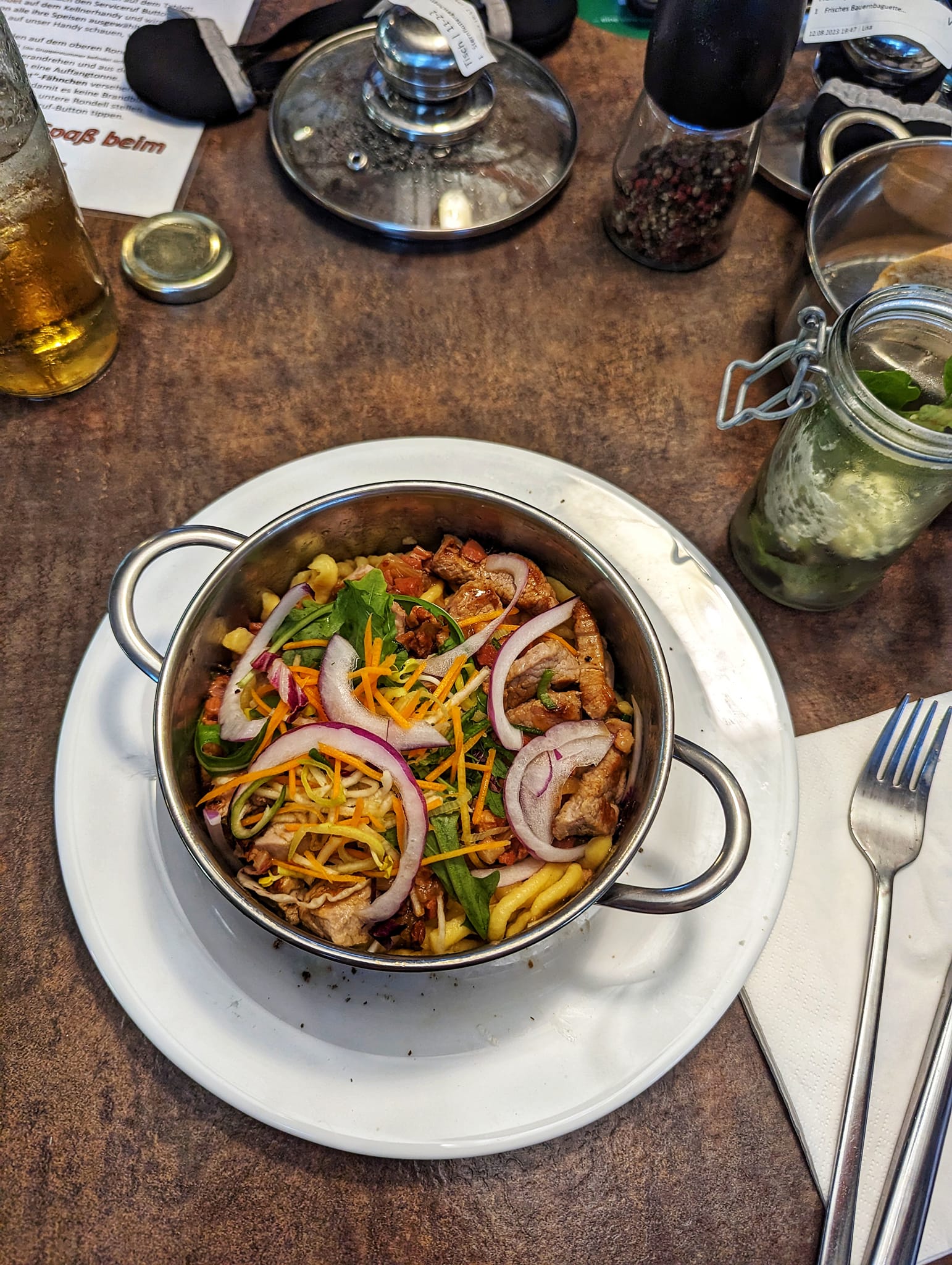
You have plenty of options for good food in Dresden but as we only visited for a weekend, let me show you where we went so you have an example of where you could eat. I researched all of these places via Google beforehand, checked their reviews and they were all great, no disappointments.
Ayer’s Rock is an Australian restaurant right in the historic centre of the city. They have a lovely terrace facing the busy narrow alleyway as well as a cosy seating area inside. I’m not sure if any real Australians are involved in this place because the Australian food is rather generic (kangaroo meat, beetroot, pavlova, lamingtons – the classics) but I have to say it was delicious so I’ll let that slide. It’s touristy for sure but good quality food.
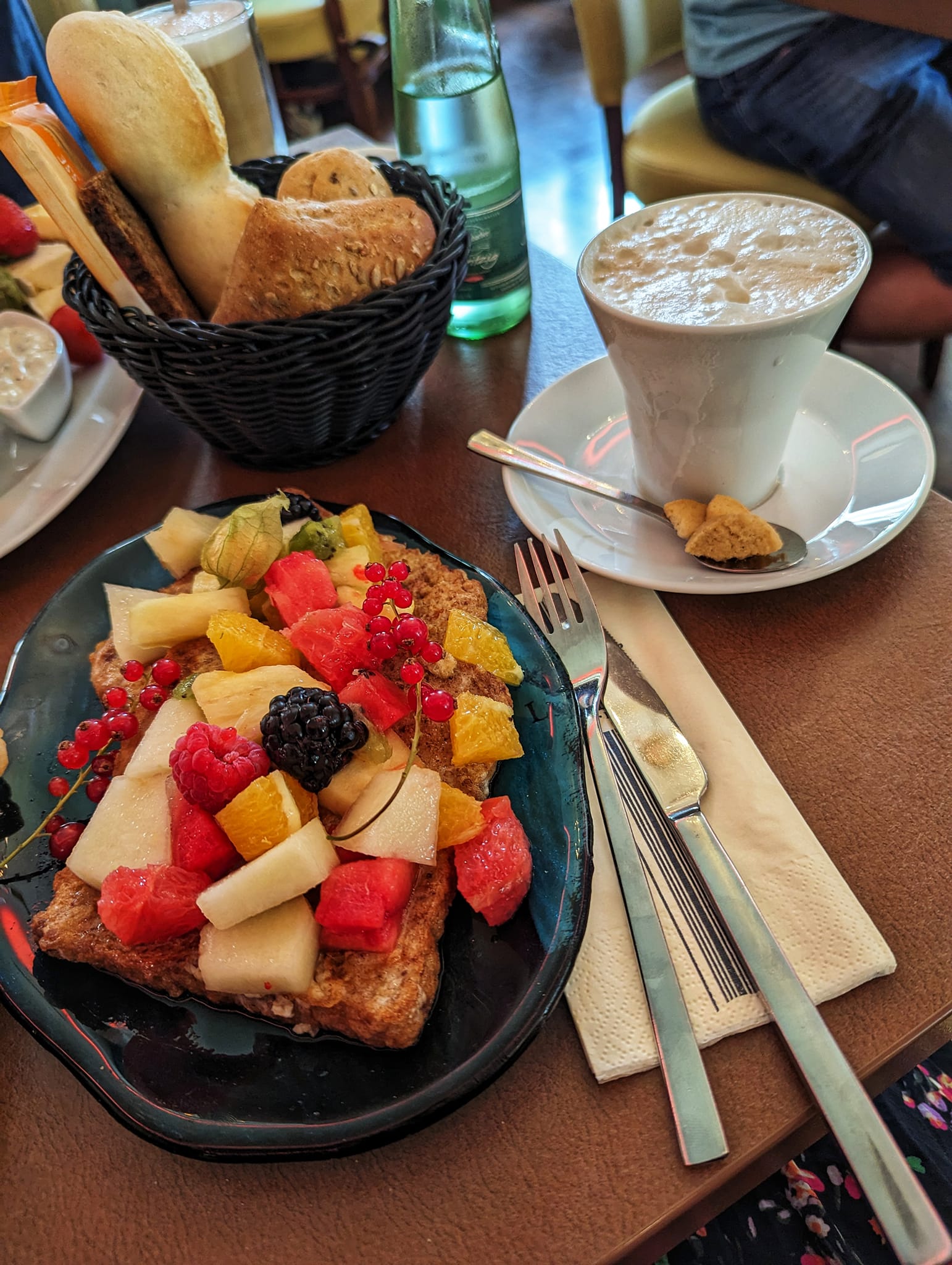
Lloyd’s Café & Bar is one of many good breakfast/brunch spots in the hip area of Neustadt. They pop up when you look for “best breakfast in Dresden” on Google and I have to say Google wasn’t lying. They have such a great menu for sweet and savoury dishes, it was hard to choose what to order. Plus our waitress was such a sweetheart. Loved it there!
Alte Meister Café & Restaurant is tucked away between Zwinger and Semper Oper, hence it’s a bit touristy by day but the location is beautiful and I heard that by night it’s a great place to wine and dine after you’ve visited the opera. We dropped in for a little coffee break on a hot afternoon and were lucky enough to get a table on the narrow terrace in the shade – it was lovely!
Camondas is the place to be for chocolate lovers. They’re famous for their traditional chocolate ice cream popsicles but sell all sorts of high quality chocolate and cocoa products. In the summer you can drop in for ice cream, in the colder months for a hot chocolate and at all times to get some chocolate souvenirs for the friends and family at home.
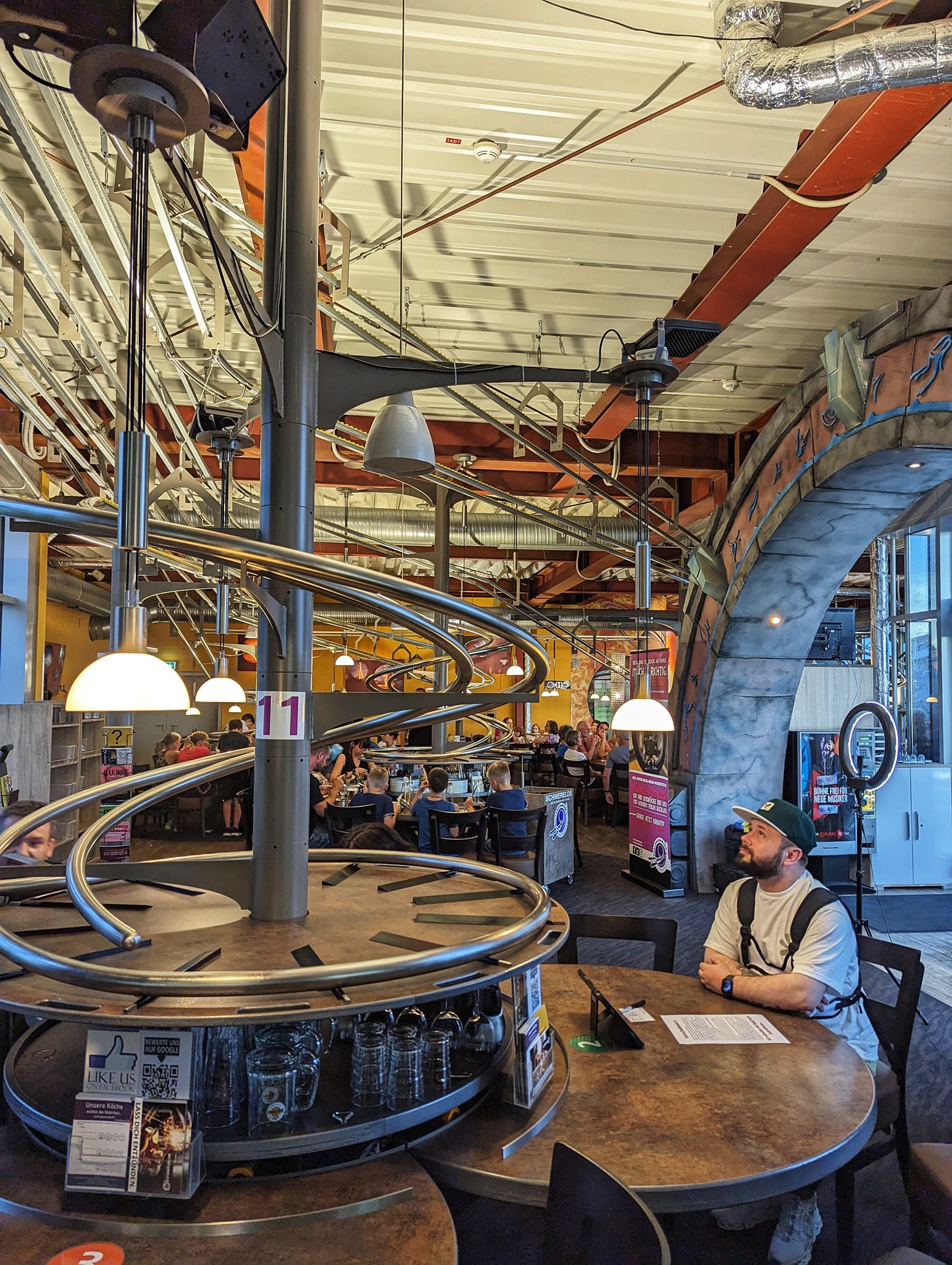
Schwerelos Dresden, the Rollercoaster restaurant – it’s hard to imagine through the photo above so I suggest you look up videos online but yes, this really is a rollercoaster restaurant. Your food and drinks get to your table via rollercoaster tracks. It was so cool, I could have watched the dishes slide along all night! So fun! The food was really nice, too. Solid savoury German dishes like Schnitzel, Spätzle etc.
Other things to see and do
Well, I have to say one weekend is not enough to experience this lovely city in all its glory. I will definitely have to go back at some point. Until then, here comes a mix of things that we did and things that I want to do next time.
Shopping at the Halloren Store
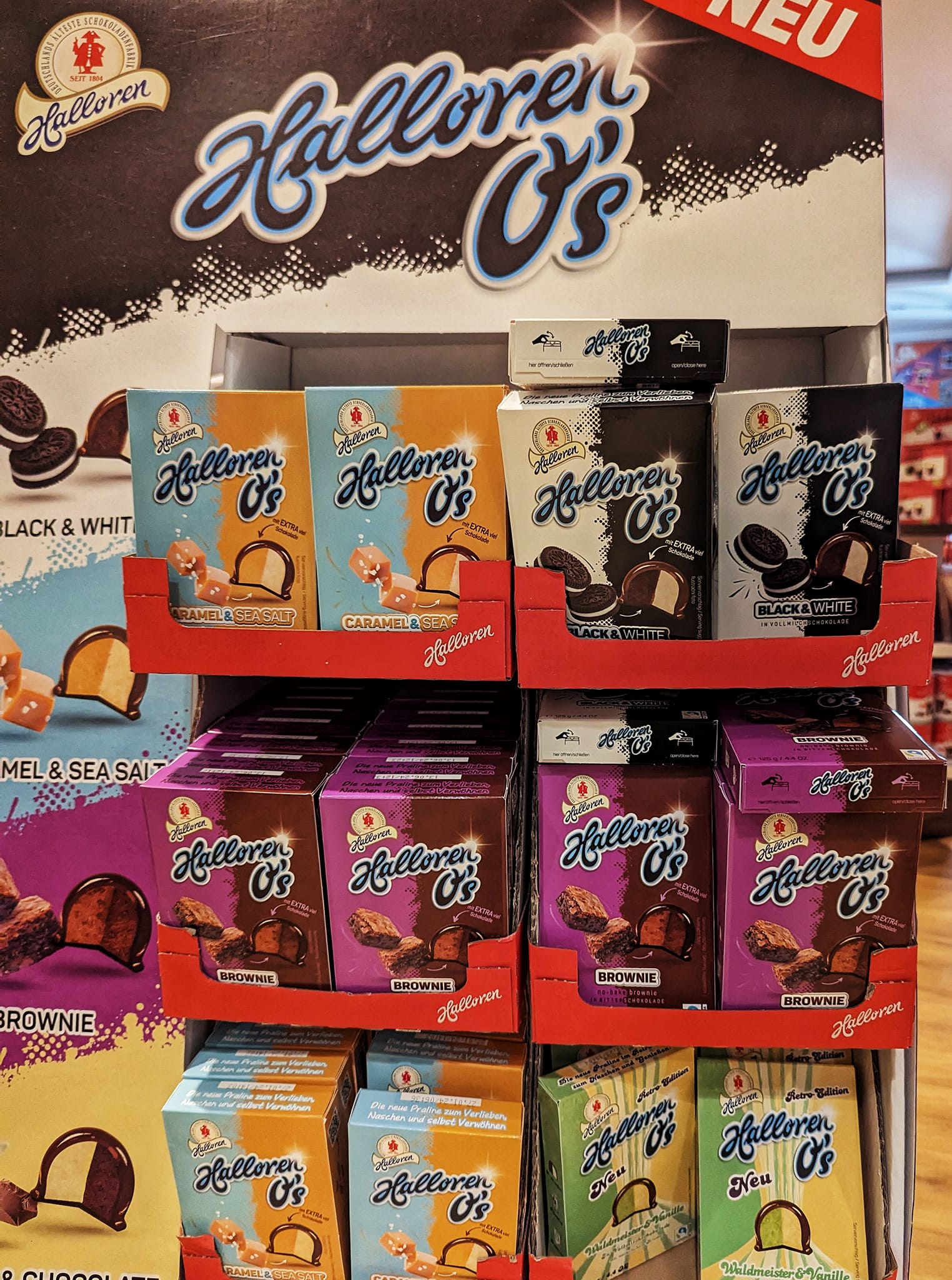
Halloren are chocolate sweets from Eastern Germany. They’re not specifically from Dresden but from a city called Halle (hence the name Halloren) in the neighbouring state of Saxony-Anhalt. They do have a store in Dresden’s oldtown at the Hilton Hotel though and I can highly recommend stocking up on all the different delicious flavours there.
Brühlsche Terrasse (Brühl’s Terrace)
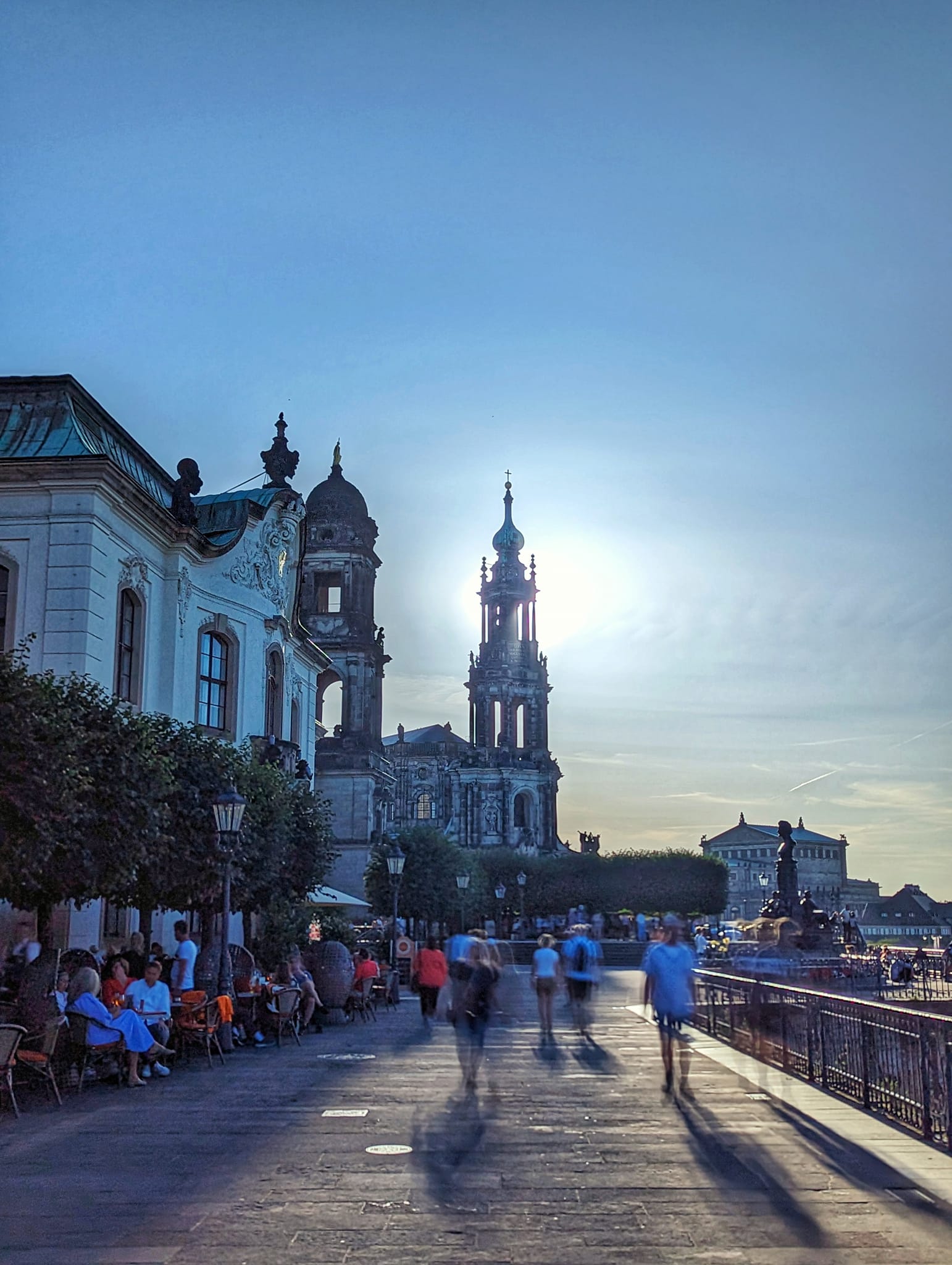
This beautiful terrace stretches approximately 500m along the Elbe River and provides panoramic views. The name stems from Heinrich von Brühl, an 18th-century statesman who led the construction of various ornate buildings in Dresden. Stop by before sunset so you have a stunning view of the historic buildings drenched in the yellow light of golden hour.
Residenzschloss (Royal Palace) and Grünes Gewölbe (The Historic Green Vault)
Residenzschloss is considered to be one of the most important buildings of the Renaissance period, serving as a cultural and political hub since the 15th century. Today it houses a variety of museums, for example Grünes Gewölbe (The Historic Green Vault), a Baroque treasury. It displays lavish items (mostly furniture, gems and jewelry) from the time of August the Strong, Elector of Saxony (1670-1733).
Elbe Flohmarkt (fleamarket)
Every Saturday from January til November there is a big fleamarket by the riverside where Albert Bridge is. We saw it from afar but it was too hot that day so we didn’t feel like going as there is no shade along the river. The fleamarket looked nice though, colourful and buzzing. You can find private and commercial sellers that offer antiquites, rarities, vintage articles, unique goods as well as food and beverages.
I’m sure there is a lot more you can do in Dresden as it’s filled to the brim with museums, cultural and historic sites, markets, event locations etc. But for now this sums up my weekend there. Dresden really wasn’t on my radar anymore at all for some reason after I had last visted it in 2005 or so. I’m glad I was able to change this! It’s a great place for a city trip and you could even extend your stay and explore the stunning landscape of an area called Sächsische Schweiz (Saxon Switzerland) outside of Dresden, which is perfect for biking, hiking and other outdoor activities.

 Travel Toast Adventures